
As HR teams navigate the ever-growing demands of modern workforces, the pressure to embrace automation is only intensifying. But with the rapid rise of AI and automation tools, many HR professionals are finding themselves wondering: how do we know we’re automating the right things?
Too often, HR teams jump straight into automation without first considering the foundational process. This is where the real challenge lies - automating a flawed workflow only amplifies existing inefficiencies. The key to truly impactful automation isn’t just adding AI to the mix; it’s ensuring that the processes you’re automating are purposeful, clear, and aligned with the goals of your organisation.
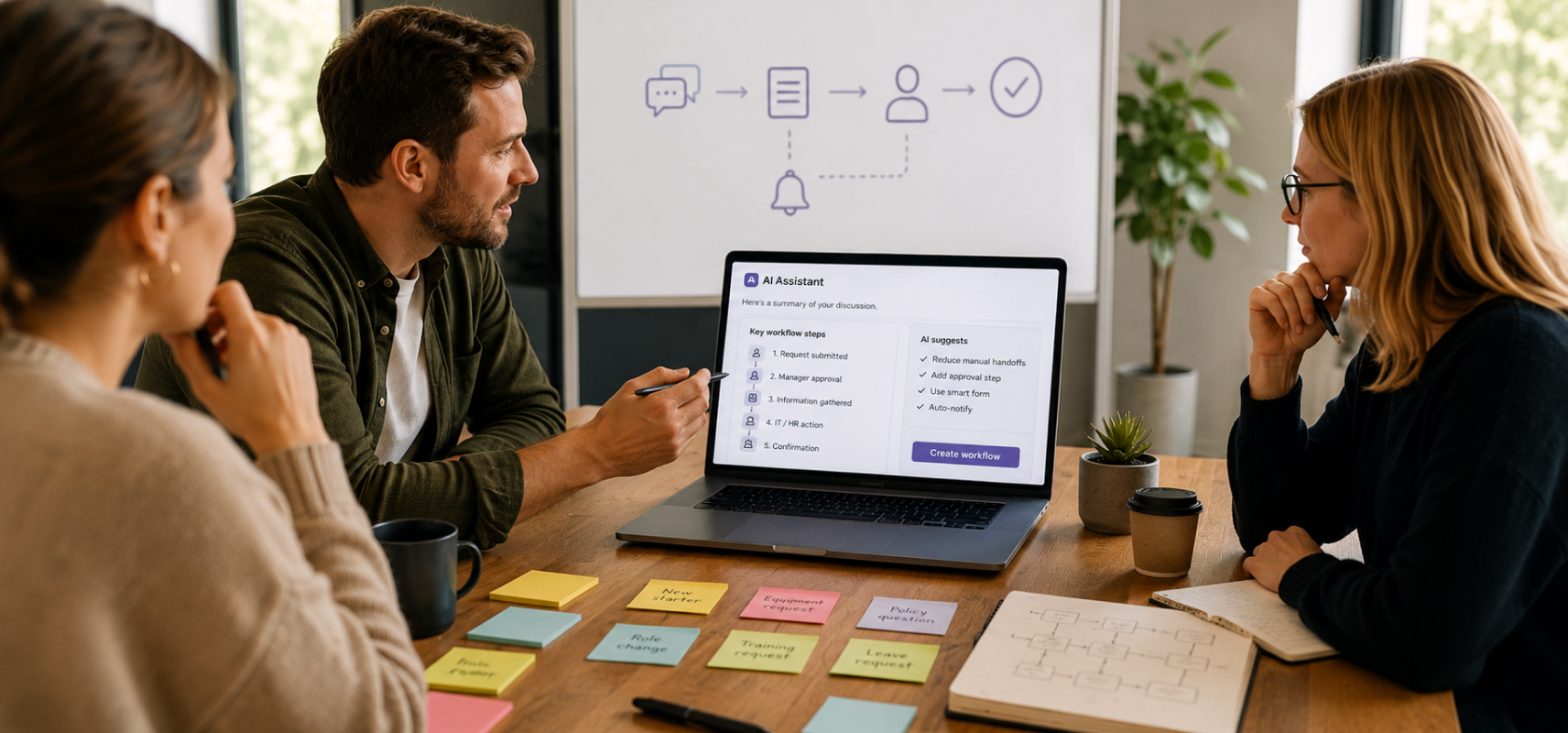
Here, we draw on insights from Matilda Kinghed, founder of Recommended By, who shared experiences during a recent webinar on designing and automating HR workflows with purpose. Matilda demonstrated how a well-structured process can lay the groundwork for seamless AI automation, transforming HR tasks from cumbersome to streamlined.
At the core of every effective workflow is a clear purpose. When you automate without first defining what you want to achieve, you risk making the process more complicated. That’s why Matilda emphasised the importance of laying out the foundation of your workflow before introducing any automation tools.
Matilda’s work with the performance review process serves as a perfect example. Traditionally, performance reviews are a process employees and managers may dread—largely because it often feels like a ritual with little tangible value. However, by first defining the goal of the performance review process - to create a roadmap for employee development, rather than just ticking boxes- Matilda was able to design a process that would add real value for both employees and managers.
Once the purpose is set, the next step is crafting a workflow that adds value for everyone involved. For Matilda, this meant creating a performance review process that wasn't just about assessing past performance but about setting a clear development path for the future.
AI plays a pivotal role here, helping to personalise each step of the process. For example, instead of sending a generic reminder or feedback form, Matilda used AI to tailor communication based on the employee’s specific history and role. This personalisation made the process feel more meaningful and relevant to each individual.
The key takeaway? AI should enhance your workflow, not take over. By integrating AI into each step, you can improve both the experience and the outcome of the process.
AI workflows are an incredible way to automate repetitive tasks, but their true power lies in how they can enhance the quality of each interaction. When AI is integrated into an already effective workflow, it adds a layer of efficiency without sacrificing the human touch.
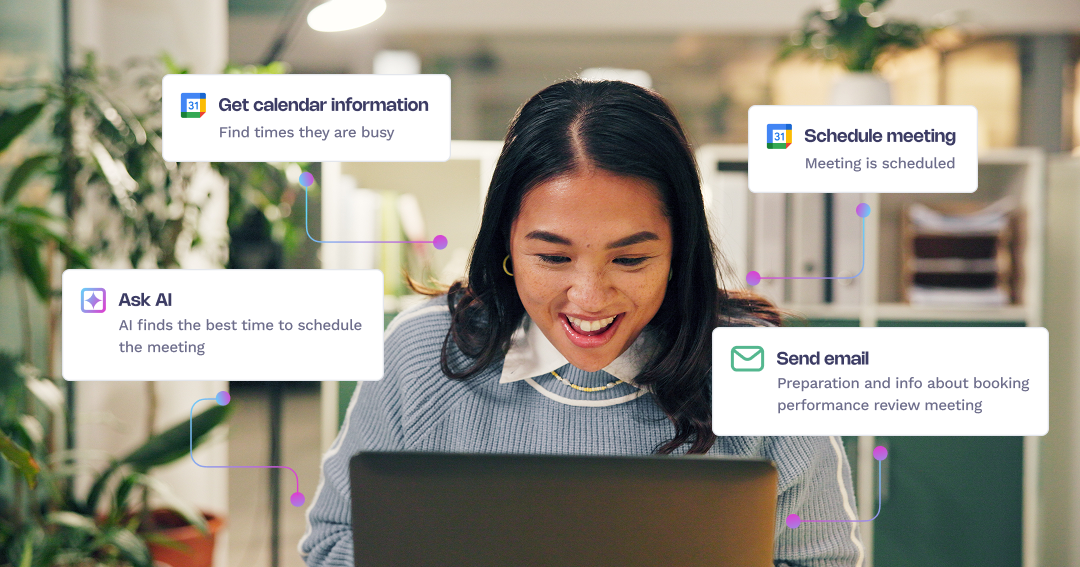
In Matilda’s workflow, AI helped summarise feedback from both employees and managers. Instead of spending hours combing through performance reviews, managers were provided with concise, actionable insights, making it easier to identify patterns and areas for development.
Moreover, AI doesn’t just save time; it helps improve the quality of the process. By ensuring that feedback is structured and relevant, AI ensures that the performance review discussion is meaningful for both the employee and the manager.
The beauty of automating with purpose is that it doesn’t just make processes faster - it makes them feel effortless. One of the standout features of Matilda’s performance review workflow was the automation of scheduling. Once both the employee and manager completed their reflections, the system automatically scheduled a review meeting, removing the hassle of coordinating calendars.
This kind of automation frees up valuable time for HR teams and ensures that important conversations, like performance reviews, happen without delay. This simplicity helps create a more positive experience for employees and managers, allowing them to focus on the discussions that matter most.
Matilda’s workflow is a prime example of how AI can enhance HR processes when it’s used thoughtfully. AI doesn’t replace human interaction - it amplifies the process, ensuring that HR tasks are completed with greater accuracy, efficiency, and relevance.
By combining AI with a well-designed workflow, HR teams can improve everything from performance reviews to onboarding, making sure that each process is as impactful as possible. With AI, HR teams can save time, reduce manual effort, and create a more personalised, engaging experience for employees.
If you’re considering automating your HR processes but aren’t sure where to begin, there’s no need to start from scratch. Matilda’s performance review workflow is a great starting point, and you can access the performance review workflow template created by Matilda here to see exactly how she did it.
Automating your HR workflows isn’t just about reducing time spent on administrative tasks; it’s about creating more meaningful, value-driven processes. Whether you’re looking to improve performance reviews, streamline onboarding, or optimise your employee engagement strategies, automation can help you get there. If you’d like assistance with refining your workflows or implementing AI-driven solutions, our team is here to help guide you every step of the way.
.png)

%20-%20Thumbnail%20(1).png)