

Most HR teams have been told to do something with AI.
That's not particularly helpful advice.
It's a bit like being told to "get fit". You know there's probably value in it, but you're left wondering where to start, what matters most and how to avoid wasting time on things that won't make a difference.
AI can feel similar. There are hundreds of potential use cases, new tools appear every week and every conference seems to feature another success story. Yet many HR teams are still stuck on the same question:
Where do we actually begin?
The answer is usually much simpler than people expect.
You don't need to transform your entire HR function. You don't need a huge AI strategy document. You don't even need to choose a tool straight away.
The best place to start is with a process.
Not the most strategic process. Not the biggest process. Just one process that frustrates people.
The best way to get started with AI in HR is to identify one existing process that creates unnecessary admin, delays or frustration and focus on improving it. Rather than beginning with technology, start by understanding how the process works today, where people encounter problems and what a better experience would look like.
This might sound surprisingly low-tech for an article about AI, but that's because many organisations approach AI from the wrong direction.
They start by looking at tools.
They compare platforms, attend webinars and ask what competitors are doing. While those conversations have value, they often happen too early. The organisations seeing the best results from AI tend to start somewhere else. They start by identifying a process that frustrates people, creates unnecessary admin or slows work down. Once you understand the problem, choosing the right technology becomes much easier.
One of the biggest challenges isn't the technology itself. It's knowing where AI will make a meaningful difference.
Most HR teams already have more ideas than they can realistically pursue. There are opportunities in onboarding, recruitment, performance reviews, employee requests, learning and development, compliance, policy management and countless other areas.
When everything looks like an opportunity, it's difficult to decide where to focus.
That's why many organisations end up stuck in a cycle of exploration. They discuss AI. They experiment with AI. They attend events about AI. But they never quite move beyond the conversation stage.
The teams making progress tend to take a different approach. Instead of asking, "Where can we use AI?" they ask, "Where are people struggling today?"
That question usually produces much clearer answers.
The best HR process to automate first is usually one that already causes friction.
Look for processes where employees regularly chase updates, managers complain about delays or HR spends time moving information from one place to another. If a process relies heavily on spreadsheets, inboxes or somebody remembering what happens next, there's a good chance it's worth exploring.
For example, many organisations start with processes such as:
These processes aren't necessarily the most exciting. That's often why they're good candidates.
They're repetitive. They're predictable. And they're usually responsible for a surprising amount of administrative work.
The goal isn't to automate everything at once. The goal is to improve one process, learn from it and build momentum.
Because processes reveal where value exists.
Tools don't.
Imagine somebody gave your organisation access to the world's best AI platform tomorrow. What would you ask it to do?
Without understanding your processes, that's actually quite a difficult question to answer.
A process tells you who is involved, what information is required, where approvals happen, what causes delays and what success looks like. That context is what allows AI to become useful.
Without context, AI produces generic outputs.
With context, AI can help build workflows, automate communications, route requests, generate documents and support better decision-making.
That's why process understanding should come before tool selection.
One of the easiest ways to uncover AI opportunities is to have a conversation about how a process works today.
Not a formal workshop.
Not a six-month process mapping exercise.
Just a conversation.
Gather the people involved and ask questions such as:
Record the conversation and create a transcript.
This is where things start to get interesting.
Most HR processes aren't documented particularly well. The details live in emails, spreadsheets, Teams messages and people's memories. A conversation often reveals things that would never appear in a process map.
Someone mentions that finance only approves requests over a certain value. A manager explains that nobody knows when equipment has actually been ordered. HR points out that employees keep submitting requests with missing information.
These details matter because they're often the source of delays, frustration and unnecessary work.
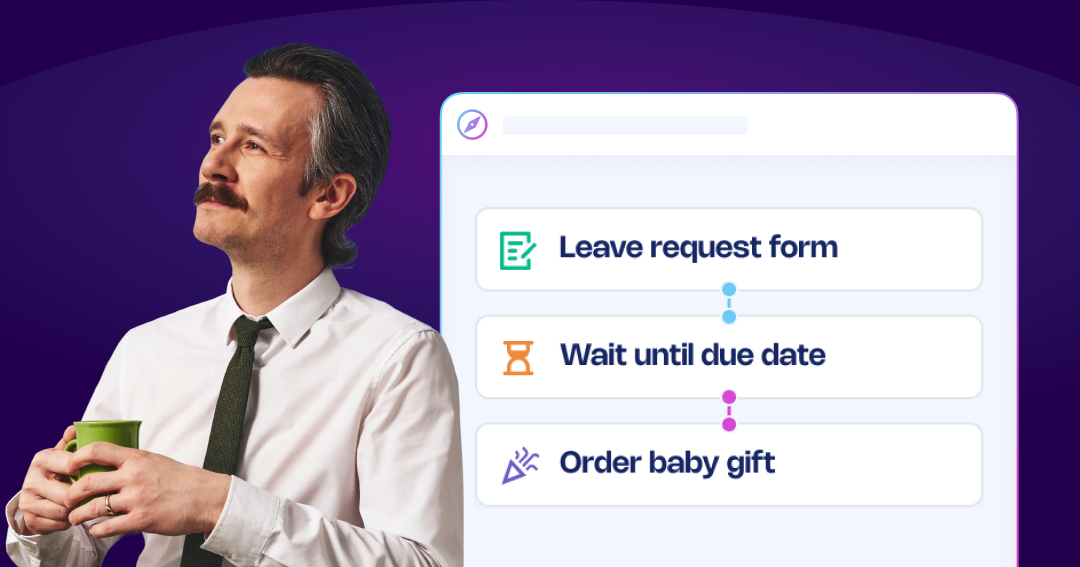
Once you have a transcript, AI can help identify stakeholders, approvals, forms, deadlines, escalation paths and potential improvements. Some organisations use this information to document their processes. Others use workflow platforms such as 50skills AI Navigator to turn those conversations directly into working workflows.
The important part isn't the technology itself. It's capturing enough context for the AI to understand how the process actually works.
Before introducing AI into any workflow, make sure you understand the basics.
These questions sound simple, but they're often where the biggest opportunities are uncovered.
Many organisations discover that the process itself isn't the problem. The problem is that nobody has ever stopped to look at how the process actually works.
AI can help improve a process, but it can't compensate for a lack of understanding about what's happening today.
One of the most common mistakes is trying to solve too many problems at once.
AI can create a temptation to think bigger. Instead of improving a single process, organisations start discussing complete transformation programmes. Months pass, meetings happen and very little changes for employees or managers.
Another mistake is focusing entirely on efficiency.
Saving time matters, but so does experience. A process that is technically faster but leaves employees confused isn't necessarily an improvement.
The most successful AI projects tend to share a few characteristics. They solve a genuine problem. They involve the people who use the process. They start small. And they focus on making work easier rather than making technology more impressive.
If you're trying to work out where AI fits into your HR function, don't start by comparing tools or building a long list of potential use cases. Start by looking at the work that people already find frustrating.
Somewhere in your organisation there's a process that generates too many emails, relies on a spreadsheet nobody fully trusts or depends on one person remembering what happens next. That's often where the most valuable AI opportunities are hiding.
The good news is that you don't need to solve everything at once. A single conversation about how that process works today can uncover delays, manual tasks and gaps that have existed for years. Once you understand the process, AI becomes much easier to apply because you're solving a real problem rather than searching for a place to use a tool.
Most organisations don't need another discussion about AI. They need a better way of getting work done. In many cases, that's exactly where meaningful AI adoption begins.
One of the quickest ways to get started with AI is to choose a process, record a conversation about how it works today and use that transcript to build something better.
50skills AI Navigator helps HR teams turn those conversations into structured workflows, forms and automations without starting from a blank page.
Book a demo to see how it works.